+91 83742 09209
 konakalla.vamsi99@gmail.com
 [Clinic Address, City]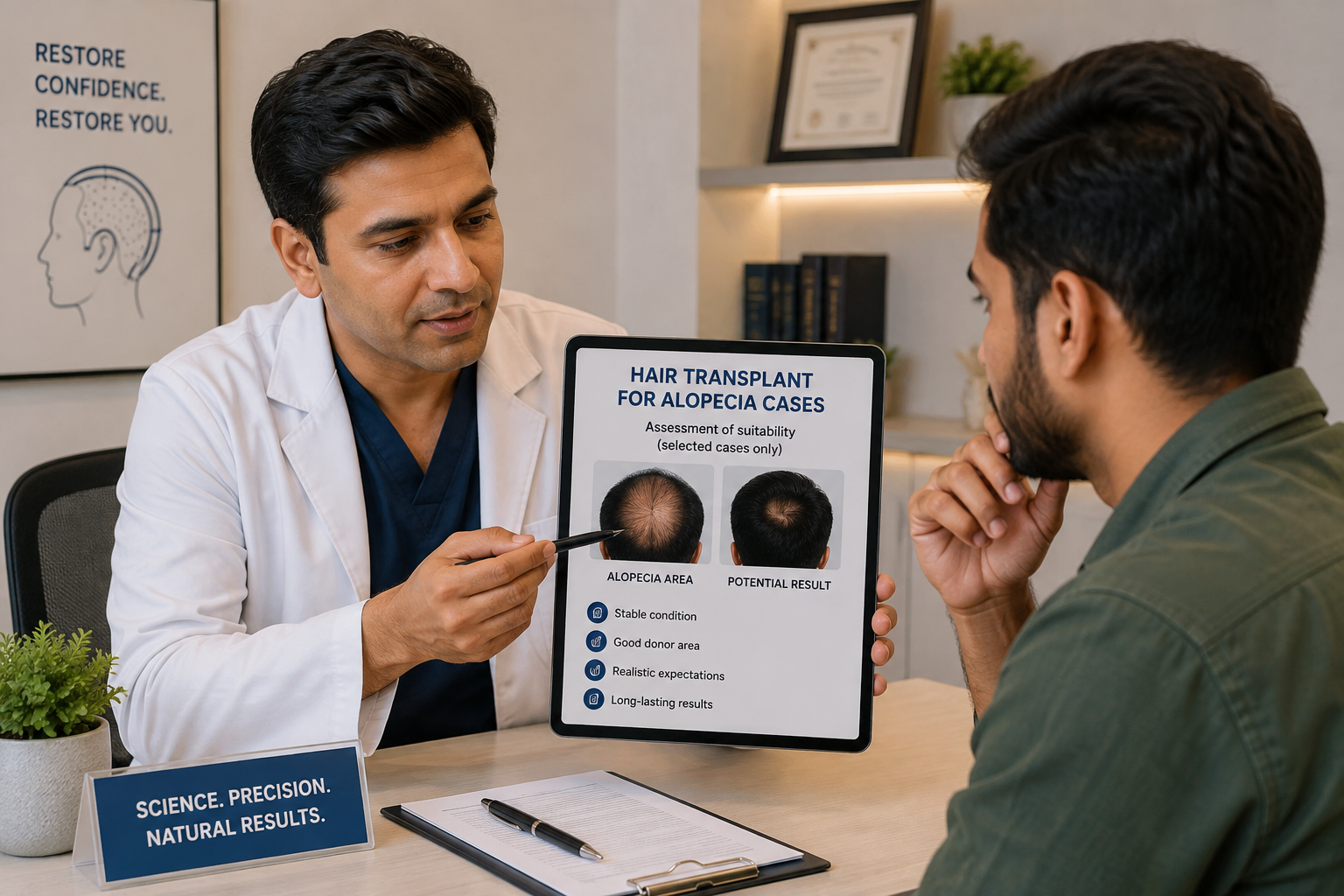
Surgical hair restoration can be a life-changing procedure, restoring both hair and self-confidence. However, a hair transplant is not a one-size-fits-all solution, and not everyone experiencing hair loss is a suitable candidate. Determining suitability involves assessing several key clinical and personal factors.
The first major consideration is the stability of your hair loss. If you are experiencing active, rapid shedding, or are under the age of 25, a transplant may not be recommended immediately. In younger patients, hair loss patterns have not yet stabilized. Performing a transplant too early can leave patients with unnatural patches of hair as the surrounding original hair continues to fall out over time.
A successful hair transplant requires a stable donor area and a realistic understanding of what can be achieved based on your current degree of thinning and hair texture.
Another critical factor is the density and quality of the donor hair, which is typically harvested from the back and sides of the scalp. Because a transplant redistributes existing hair rather than creating new hair, you must have enough healthy follicles in the donor area to cover the thinning zones. If the donor area is sparse or affected by alopecia, a transplant may not achieve the desired density.
Key criteria for hair transplant suitability
During a detailed scalp evaluation, several aspects are checked to confirm candidacy, including:
- Type of Hair Loss: Male or female pattern baldness (androgenetic alopecia) responds best. Diffuse hair loss may require medical management instead.
- Donor Density: Sufficient hair follicles in the donor area to allow safe harvesting without causing thinning there.
- Overall Health: Freedom from underlying scalp conditions like active lichen planopilaris, and general medical fitness for local anaesthesia.
- Expectations: A realistic understanding of the final density, hairline design, and the possible need for medical therapy to maintain results.
If you are not an immediate candidate, medical treatments such as GFC, PRP, minoxidil, or finasteride are often recommended to stabilize hair loss first. A thorough consultation is the best way to get a customized plan. This article is intended for general education and does not replace medical advice.
 Call Us :